


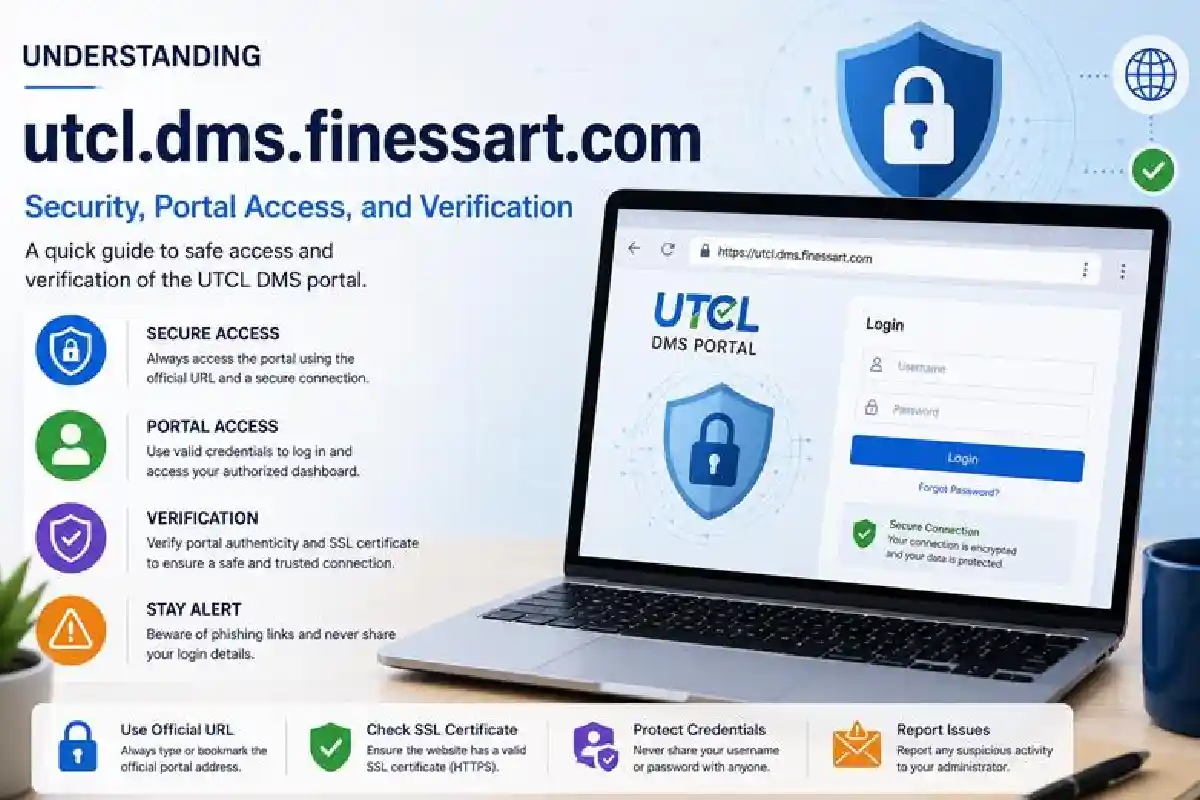
When navigating the web for corporate resources, enterprise distributors, and specialized software systems, users frequently encounter complex URLs. One such string that occasionally prompts inquiries is utcl.dms.finessart.com. Deciphering what an unfamiliar link represents requires a systematic approach to domain analysis, security checks, and adherence to official channels.
Technologyify aims to clarify how to approach such links safely. This guide breaks down the structure of utcl.dms.finessart.com, outlines the risks of navigating unverified web portals, and provides a clear framework for verifying corporate access points.
Anatomy of the URL and Domain Structure
To understand any web address, it helps to read it from right to left. The root domain forms the base of ownership, while subdomains often point toward specific applications, regional servers, or third-party hosted services.
Breaking Down the Components
Examining utcl.dms.finessart.com reveals several distinct layers:
- .com: The top-level domain (TLD), indicating a commercial entity.
- finessart.com: The primary registered domain name. This suggests the infrastructure or hosting domain belongs to an organization or service provider named ‘finessart’.
- dms: A common acronym frequently used in enterprise environments to denote a Dealer Management System or Document Management System.
- utcl: A prefix that often acts as an abbreviation for specific corporate entities, internal projects, or client identifiers (such as UltraTech Cement Limited in certain regional industrial contexts).
While the combination of these labels suggests a specialized business portal hosted on a third-party or partner domain infrastructure, users must never assume official corporate affiliation without direct confirmation from the primary organization.
Security Risks Associated with Unfamiliar Subdomains
Encountering subdomains that combine well-known corporate acronyms with independent third-party domains warrants careful scrutiny. Phishing campaigns, typosquatting, and unauthorized credential collection sites often leverage complex subdomain structures to appear legitimate.
Key Vulnerabilities and Threat Vectors
Unverified login portals present several distinct digital risks:
- Credential Harvesting: Fake portals mimic legitimate enterprise login screens to capture usernames and passwords.
- Data Interception: Insecure HTTP connections or invalid SSL certificates can expose transmitted data to intermediate networks.
- Permission Overreach: Third-party applications integrated via custom subdomains might request excessive browser permissions or access tokens.
| Risk Factor | Potential Impact | Mitigation Strategy |
|---|---|---|
| Unverified Third-Party Hosting | Data routed through external servers without direct corporate oversight. | Always verify the official vendor directory or corporate intranet notice boards. |
| Missing or Invalid SSL Certificates | Data sent in plain text, vulnerable to eavesdropping. | Check for the padlock icon and inspect the certificate details before entering any data. |
| Ambiguous Identity | Uncertainty regarding whether the portal is officially sanctioned. | Contact corporate IT support or authorized account managers directly. |
Step-by-Step Verification and Safe Access Framework
Before entering credentials, downloading files, or interacting with unfamiliar web interfaces like utcl.dms.finessart.com, users should implement a strict verification routine. Relying solely on links found in unverified emails, messaging apps, or search engine ads can expose systems to malicious actors.
A Practical Decision Framework
- Trace the Source: Determine how you arrived at the link. Did it come from an official company email ending in an authentic corporate domain, or an unverified chat message?
- Consult Official Channels: Navigate to the primary, verified website of the organization in question. Official dealer or partner portals are almost always linked directly from the primary corporate homepage (e.g., through a dedicated ‘Partners’, ‘Login’, or ‘Vendor Portal’ menu).
- Inspect the SSL Certificate: Click the padlock symbol in the browser address bar to verify the issuer of the SSL certificate. Legitimate enterprise subdomains possess valid certificates issued to the rightful organization or their verified cloud hosting provider.
- Avoid Credential Reuse: If you must test an unfamiliar portal, never use passwords associated with your primary email, banking, or critical enterprise accounts.
- Contact Support: When in doubt, reach out directly to the official helpdesk or regional administrative office of the company you are trying to access.
Frequently Asked Questions
What does DMS stand for in web URLs?
In a business context, DMS typically stands for Dealer Management System or Document Management System. It denotes software designed to handle inventory, billing, customer records, or internal files.
Is utcl.dms.finessart.com an official corporate link?
Identity uncertainty surrounds links hosted on third-party domains. While ‘utcl’ may resemble corporate shorthand, always confirm authenticity through official company documentation or direct IT support rather than trusting the URL string alone.
What should I do if I accidentally entered my password on an unverified site?
Immediately change your password across all accounts where you used the same credentials. Enable multi-factor authentication (MFA) and scan your device for potential malware or unauthorized session tokens.
Conclusion
Navigating enterprise technology requires vigilance. While URLs like utcl.dms.finessart.com often serve administrative or logistical functions for specific supply chains, third-party hosting structures demand careful verification. By prioritizing official navigation routes, inspecting SSL certificates, and maintaining robust digital hygiene, users can protect their credentials and secure their digital workflows against potential threats.
Related Guides
Explore more useful resources related to this topic: