


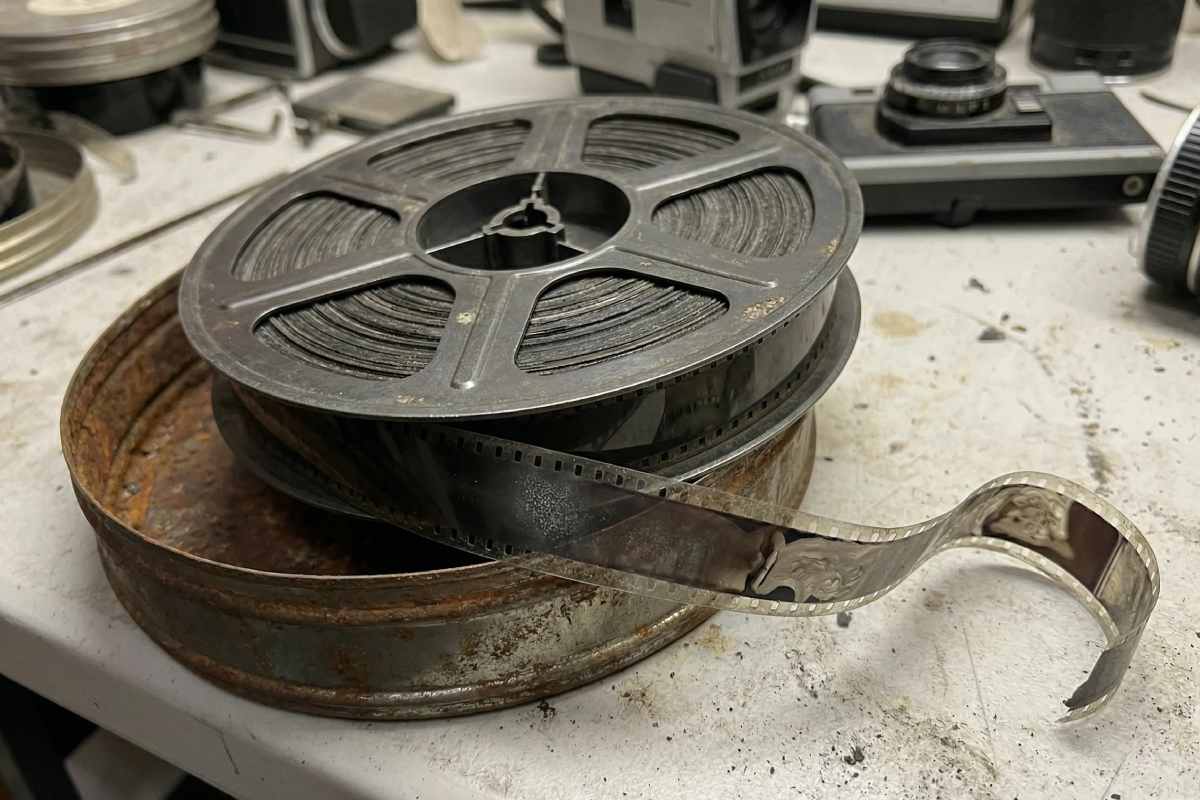
If you’ve discovered old family films or inherited a collection that’s seen better days, you’re probably wondering whether those precious memories can be saved. Can damaged or deteriorating film be repaired before digitization?
Yes, damaged film can often be repaired before digitization. Common repairs include splicing broken sections, cleaning dirt and mold, flattening warped areas, and lubricating brittle film to prevent further breakage during scanning.
However, the type and extent of damage matter significantly — some conditions can be fully corrected while others can only be stabilized or minimally improved, which directly affects both the repair cost and the final quality of your digitized footage.
What Types Of Film Damage Can Be Successfully Repaired?
Many common forms of film damage are repairable with the right expertise and equipment, though the specifics depend heavily on the film stock. Most home movies you’ll encounter are 8mm, Super 8, or 16mm — all acetate-based and prone to vinegar syndrome and brittleness as they age. Larger 35mm originals and pre-1950 prints may be nitrate-based and require specialized handling. Magnetic video formats (VHS, Hi8, Betamax) have entirely different failure modes — binder breakdown, mold, and tape stiction — and aren’t repaired the same way.
Physical breaks and tears on film are among the most straightforward repairs — technicians splice broken film using specialized archival tape or cement. Scratches can sometimes be minimized through careful cleaning and polishing, though deep scratches that have removed the emulsion layer itself are typically permanent.
Mold and mildew, which appear as spots or fuzzy patches on film stored in humid conditions, can usually be cleaned off if caught before it eats into the emulsion. Dirt, dust, and sticky residue from deteriorating splices can be removed through ultrasonic cleaning or careful hand-cleaning. Warping and curling caused by heat or humidity fluctuations can often be corrected using humidity chambers and specialized flattening equipment.
Vinegar syndrome presents a more challenging situation. This chemical deterioration — documented by the Image Permanence Institute as the primary failure mode for acetate film — causes the base to shrink, become brittle, and emit an acidic smell. The process can’t be reversed, but film can sometimes be stabilized enough for one final scan before further deterioration. Extreme brittleness and severe shrinkage may allow for only minimal handling — in these cases, repair is limited to gentle cleaning and very careful transport through scanning equipment.
When Is Film Damage Too Severe To Repair?
Film that has completely decomposed into a sticky mass — the final stage of vinegar syndrome — cannot be saved. The cellulose base has broken down so completely that attempting to run it through equipment would damage both the film and the scanner. Film that crumbles to the touch or has shrunk so severely it no longer fits on sprockets may be too fragile to handle at all.
Fire or water damage can also render film unrecoverable, depending on the severity. Extensive water damage leading to complete emulsion separation — where the image layer has peeled away from the base — typically means those sections are lost forever. Heavy rust or corrosion transferred from metal film cans can sometimes be cleaned, but if it’s eaten through the emulsion, the image is gone.
In cases of severe damage, the decision often comes down to whether attempting repair might cause more harm than leaving the film untouched. A reputable service will assess the film honestly and advise whether the risk of further damage outweighs the potential benefit of capturing what remains.
How Much Does Film Repair Add To Digitization Costs?
Basic cleaning and minor repairs might add $10–$25 per reel to your total bill. Extensive repairs requiring hours of hand work — splicing multiple breaks, removing stubborn mold, or treating severely warped film — can add $50–$150 or more per reel, depending on condition and footage length.
Most services charge separately for repair work, performing an assessment first and providing a detailed estimate broken down by reel. This lets you prioritize — opting for full restoration on footage containing irreplaceable family milestones while choosing minimal repair on less important material. Basic inspection, simple cleaning, and ensuring the film can safely pass through the scanner are usually included in standard scanning pricing. When budgeting, set aside roughly 25–50% more than the base quote to cover potential repair costs on older films.
Should You Attempt DIY Film Repair Or Hire Professionals?
DIY film repair is generally not recommended unless you have proper training and equipment. Film is incredibly delicate, and well-intentioned amateur repairs can cause irreversible damage. Using the wrong tape or adhesive can leave sticky residue that attracts dirt and accelerates deterioration. Household cleaning products can strip away the emulsion or leave behind chemicals that promote further decay. Even rewinding film incorrectly can create stress points that lead to new breaks.
Professional film archivists — many of whom follow guidelines published by FIAF (Fédération Internationale des Archives du Film) and AMIA (Association of Moving Image Archivists) — have access to archival-quality splicing tape, pH-neutral cleaning solutions, and controlled-environment chambers for treating warped film. More importantly, they have the experience to recognize different film stocks and apply the correct technique for each. What looks like simple dirt to an untrained eye might be fungal growth requiring specific treatment; what appears to be a minor warp could indicate underlying vinegar syndrome needing careful handling.
A few minimal tasks are safe to perform yourself. Gently dusting loose surface dirt with a soft lint-free cloth, carefully rewinding film that’s come off its reel, and inspecting and documenting obvious damage are relatively low-risk activities that help professionals provide more accurate estimates. Anything involving splicing, chemical cleaning, or flattening warped sections should be left to experts — the risk of destroying irreplaceable memories isn’t worth the modest savings.
How To Store Film Before Digitization
How you store film in the meantime can make the difference between salvageable and irretrievable footage. The most critical factor is temperature and humidity control. The Image Permanence Institute recommends storing acetate film at 65–70°F with relative humidity between 30–50% to slow deterioration; colder is better for long-term preservation, but those numbers are a workable target while a reel waits for scanning. Basements, attics, and garages are poor choices due to temperature fluctuations and moisture.
A climate-controlled interior closet or dedicated archival storage box in a temperature-stable room is far better for personal collections. For masters, original camera negatives, or larger libraries with real commercial or historical value, film archive storage offers the climate-controlled vaulting and handling protocols that household setups simply can’t match.
Remove film from deteriorating metal cans if you notice rust or corrosion, as these can transfer to the film itself. Replace them with archival-quality plastic containers designed specifically for film storage. If you smell vinegar when opening a can, that film has begun to deteriorate and should be isolated from other reels — vinegar syndrome can spread to nearby film through the acidic gases it releases. Place affected reels in sealed plastic bags or separate containers to contain the off-gassing.
Avoid repeatedly handling or viewing the film while you wait. Every time a film passes through a projector, it experiences stress, heat, and potential scratching. Running already-damaged film through equipment could create new breaks or worsen existing problems. Don’t unroll and examine entire reels by hand either — oils and moisture from your skin can damage the emulsion, and you might accidentally crease or tear fragile sections. Schedule your appointment as soon as reasonably possible, store the film properly in the meantime, and let professionals handle it from there.
Time To Take Action
Have your film professionally assessed as soon as possible. Before you book, take a few minutes to vet any service you’re considering. A reputable vendor will inspect each reel and provide a written condition report before scanning rather than running damaged film blind, and they’ll price repair work as transparent line items rather than burying it in a “repair included” bundle that often means minimal actual repair.
Ask what resolution they scan to and what file formats they deliver; 2K minimum for 8mm and Super 8, with ProRes or DPX masters plus an H.264 viewing copy, is the modern standard. Most importantly, ask how they handle film with vinegar syndrome or other instability. A vendor that can’t answer that confidently shouldn’t be entrusted with a reel that may only survive one more pass through a scanner. The sooner you act, the better your chances of preserving those irreplaceable memories before deterioration progresses beyond the point of repair.